

AI document processing

AI document processing for invoices and forms

Documents become useful when the right values reach the right workflow with traceable checks. We assess what your existing software can already do, then build the missing intake, validation, review or transfer steps. For teams across Europe, we agree the scope around your document types, languages, currencies and target systems. Intelligent document processing needs a checked destination record, not just extracted text.

See what we automate →

30 minutes, no obligation, German or English. EU hosting and a DPA are standard. Clicking loads Cal.com (USA); the call runs on Google Meet. Prefer to write first? Ask by email. We send the draft data processing agreement and our terms on request.

Receive
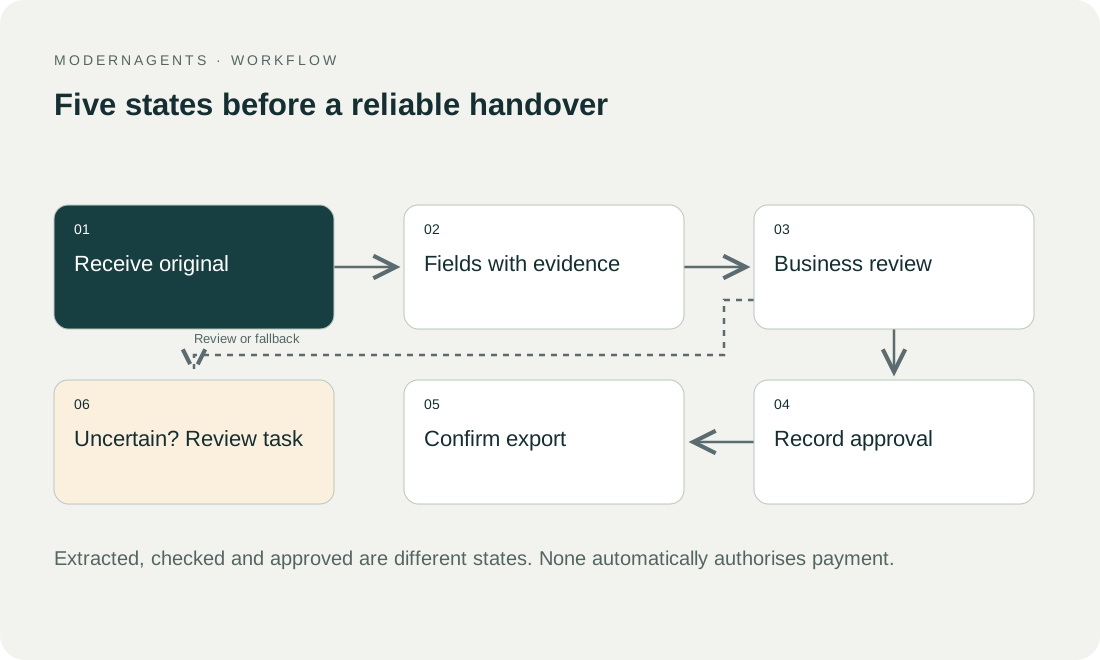
An invoice arrives as a PDF, a scan or an e-invoice, by email or upload. The system picks it up from the inbox.How it works · step 1/3
Check
It extracts supplier, amounts, VAT and dates, matches the order or supplier record and applies your rules.How it works · step 2/3
Approve
Clean documents are prepared for export. Uncertain fields and rule breaches go to your team, which checks and approves.How it works · step 3/3

In short

We assess what your existing software can already do, then build the missing intake, validation, review or transfer steps. For teams across Europe, we agree the scope around your document types, languages, currencies and target systems. The trial starts at €2,500 and is credited towards implementation; scope and acceptance criteria are agreed beforehand.

From real engagements

Philipp Statzinger

Philipp Statzinger · Tax advisor & founder, Statzinger Steuerberatung

“We run a fully digital tax firm, so the inbox is where the work arrives. The audit showed us which two automation ideas to drop and which one to build first: sorting incoming client mail.”
Read the case study →

What we automate

From the inbox to a checked document in the right system

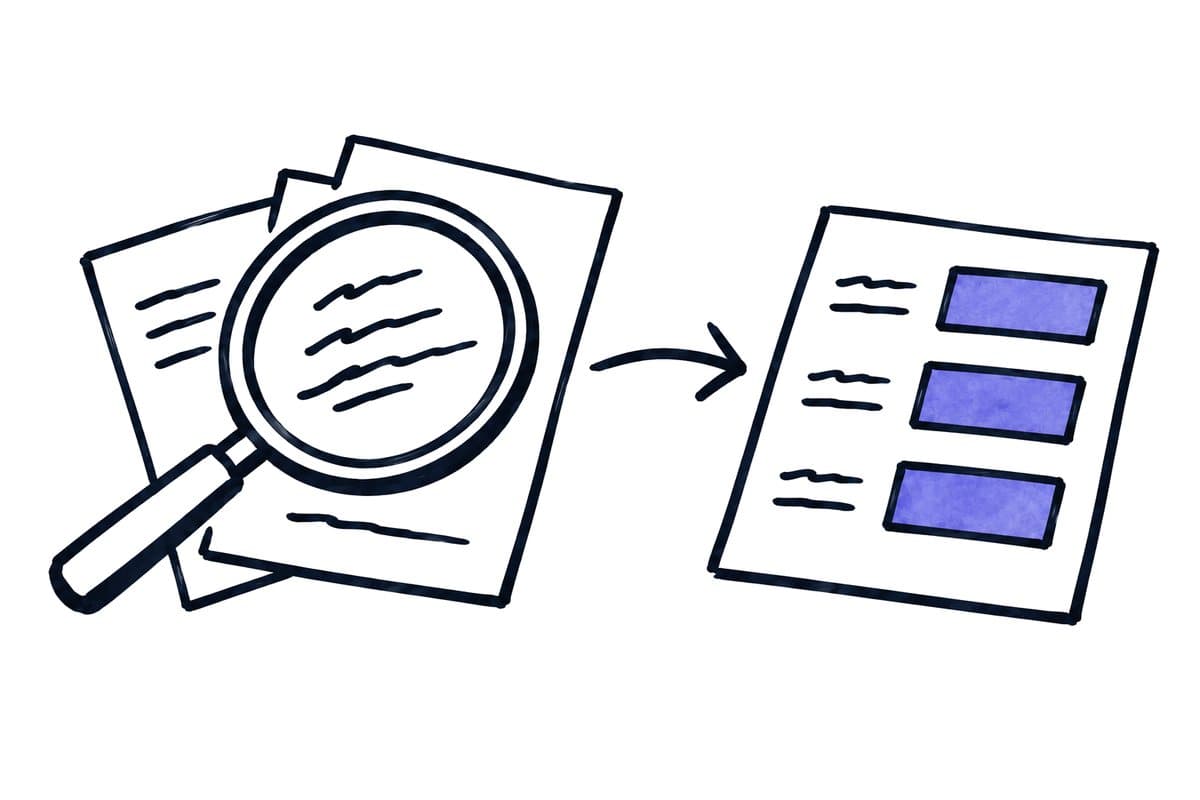
Reading text from a PDF is the easy part, whether it is an invoice, a delivery note, an order form or a damage report. The value lies in the checks your team does by hand today and in routing each document to the right place.

Structured data before OCR

Check whether an e-invoice already contains usable structured fields. Use extraction for the parts that require it; do not treat every input as an image.

  • Validation and assignment

    Check required fields, totals, period and supplier assignment against agreed rules. Unclear identities and changed bank details need their own review rather than a guessed value.

  • Intake and missing information

    Associate arrivals such as applications, contracts or supporting documents with a defined transaction and identify missing items against your approved checklist. External requests are prepared for review; the system does not invent what a customer must submit.

  • Supported handover

    Check imports, exports or APIs in your actual environment, whether the destination is a CRM, industry software or accounting. BMD, DATEV, bexio and Abacus, for example, have different capabilities and access conditions; no universal connector is promised.

  • Duplicates and interrupted transfers

    Retain a stable transaction identity. If the destination accepted a record but the response was lost, establish its status before retrying.

  • A measurable acceptance test

    Agree expected values, critical errors and fallback behaviour before the trial. Measure field errors and remaining review time rather than reporting one unexplained accuracy percentage.

Data protection

Your documents, your rules, your approval

Invoices and forms contain personal and business data. The setup is built so that data stays controlled and nothing is passed on that your team has not seen when it matters.

EU hosting or on-premise
Documents are processed on EU infrastructure, or on your own servers if your data requires it. We document where each step runs.
Data processing agreement
Before we touch real documents, we sign a data processing agreement under the GDPR. Model providers are configured so your documents are not used for training. In typical EU deployments we use the models through AWS Bedrock and Azure OpenAI in EU regions.
Your team checks and approves
Agree which cases require review and what the reviewer must see. Display the original, proposed values and failed checks; measure the time needed rather than assuming every check takes seconds.
Traceable for audits
Every document keeps its original, the extracted values, the checks that ran and who approved it. That makes the process explainable to your auditor.

How it starts

From a sample folder to a running process

  1. Intro call

    Free

    30 minutes on your document types, volumes and target systems. If automation does not pay off, we tell you.

  2. Trial run

    from €2,500 · credited in full if you proceed

    We run a sample of your real documents through a first version and show you the error rate per field. If we advise against automating in writing, you get the fee back.

  3. Implementation

    Fixed fee per proposal · care from €250 per month, cancellable monthly

    We connect inbox, checks and export, train your team and go live. Monthly care covers monitoring and new document layouts and can be cancelled.

The implementation of one contained workflow costs about €3,000 to €5,000. Projects with several processes and systems cost more, and the fixed fee is in your proposal before work starts. Ongoing care starts at €250 per month per workflow. 30 min · remote · no obligation. And if AI isn't the right tool, we'll say so.

Fair questions

What businesses ask about automated document processing

01When is your existing software sufficient?

When it covers your document types, checks, review and handover. We examine native features before recommending another processing layer.

02Can you connect our accounting or industry software, for example BMD, DATEV, bexio or Abacus?

We assess the supported route for your version, modules, permissions and target data. Product documentation is not proof that a particular customer environment is already connected.

03How accurate is the system?

We do not quote a universal accuracy rate. The trial evaluates agreed fields and critical errors on your authorized sample, including missing values, exceptions and remaining work.

04What happens to an uncertain document?

It remains a visible review task with its original and proposed values. The workflow must not silently invent a field or export an unapproved critical change.

05What is the first step?

Describe one document type, monthly volume, common exceptions and the target system. The trial starts at €2,500 and is credited towards implementation; scope and acceptance criteria are agreed beforehand. The implementation of one contained workflow costs about €3,000 to €5,000. Projects with several processes and systems cost more, and the fixed fee is in your proposal before work starts. Ongoing care starts at €250 per month per workflow. Read the article with the cost examples. Calculate with your own numbers.

Service and project scope

Who is it for?

For teams handling recurring documents, forms or emails with clear review rules. A low document volume does not automatically justify a custom AI system.

Use this outline for the introductory call. The individual proposal and agreed acceptance criteria define the commitment.

Robert Van Ysendyck

Robert Van YsendyckFounder & Managing Director

In 30 minutes we can tell whether your documents are a good fit for automated processing. If they are not, we tell you.