

Chapter 1 / 9
What an AI phone assistant can take over
An AI phone assistant answers calls, interprets spoken requests and provides information or initiates permitted work. Businesses should distinguish three capabilities: giving information, capturing a structured request and completing a binding action. A system that can state opening hours is not automatically able to book a suitable appointment or change an order.
Start with the reasons people actually call. Group them by the permitted outcome: immediate information, callback task, transfer or confirmed action. Collect common follow-up questions and the cases in which an experienced employee currently makes a decision. This produces a usable conversation scope. “Answer every call” is too vague to specify the implementation.
| Reason for calling | Useful initial scope | Evidence required |
|---|---|---|
| Opening hours and directions | Answer from an approved source | Correct branch and holiday information |
| Callback request | Capture contact details and reason | Task in the correct inbox or CRM |
| Appointment request | Check permitted options or record a preference | Confirmed booking identifier or explicit callback status |
| Existing order | Verify the reference and route the request | Authorised assignment without exposing other customers |
| Complaint or unclear exception | Capture the issue and hand over | Responsible recipient with conversation context |
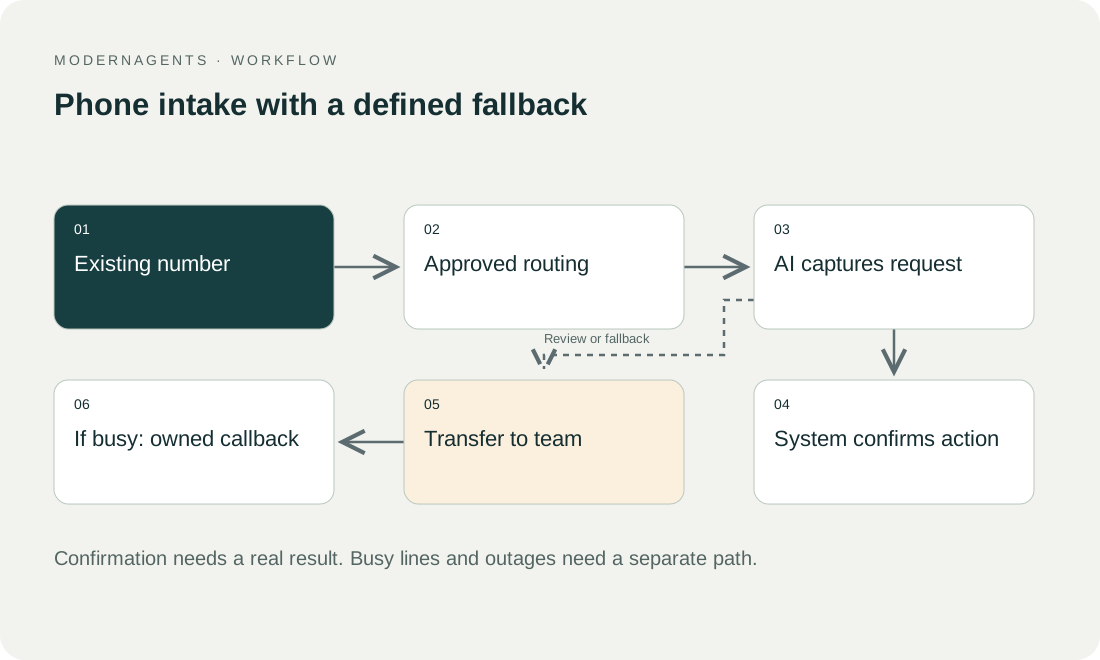
Bounded call intake can already be useful when it turns missed requests into organised work. Assess its value through completed callbacks and correct handovers. Conversation duration alone demonstrates neither customer satisfaction nor resolution. A short call can lose an important request, while a longer call may be necessary to confirm an unfamiliar address.