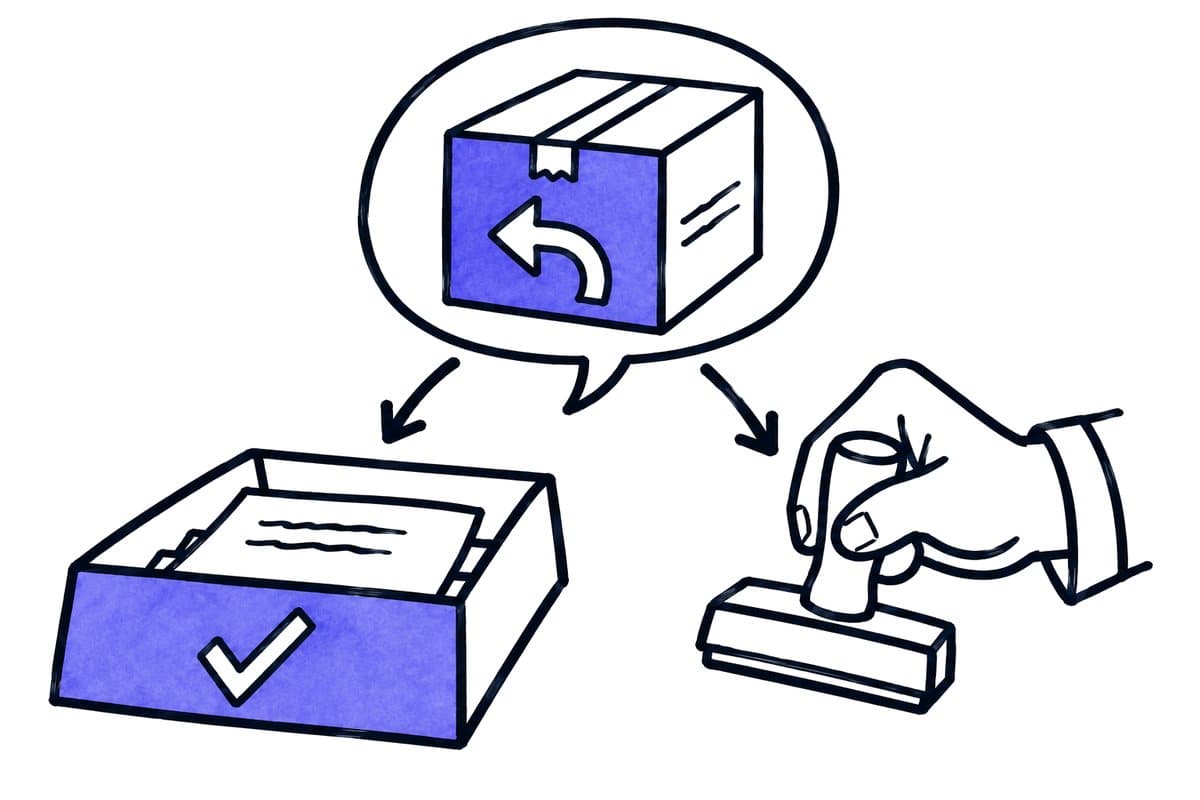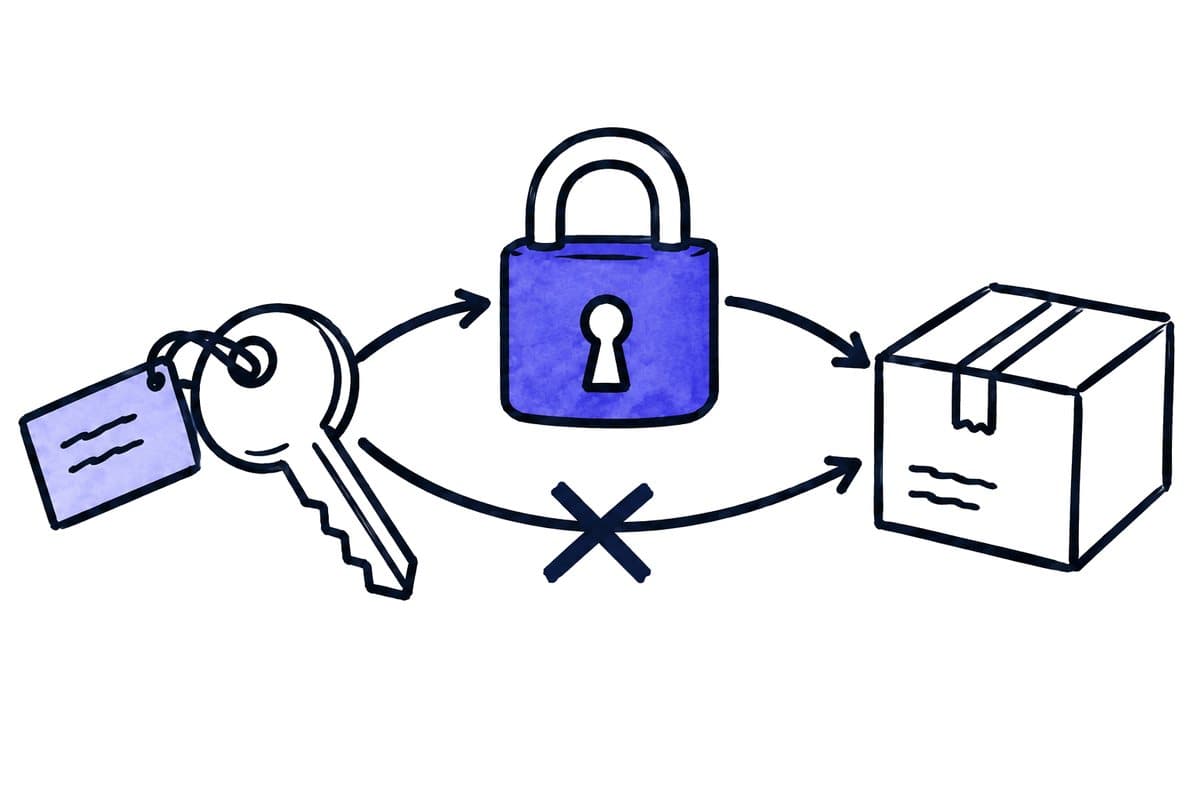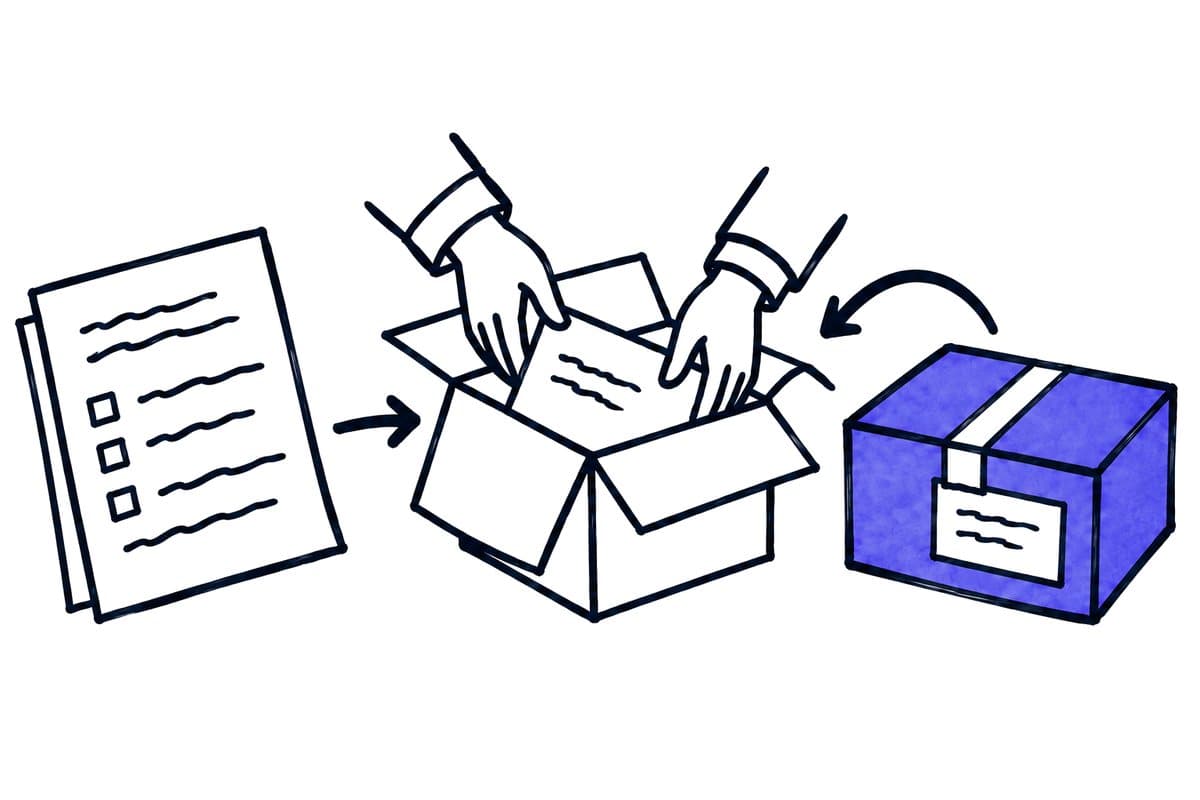
First examine what Shopify Inbox and the existing order-status page already provide. An additional app or custom AI connection is useful when it addresses a demonstrated gap. This guide presents a proposed design and synthetic acceptance cases, not an integration we have already deployed in a store.
Key takeaways
The main points for a Shopify order-status chatbot are:
- The article distinguishes three technical routes: Inbox with the existing status page, a supported Shopify application and a custom API integration.
- Knowing an email address does not establish authenticated account access; when a user supplies another person's reference, the chat must withhold personal information.
- Permission to read status does not automatically allow address changes, cancellations or refunds.
01 / 14
What do Shopify Inbox and its native features already cover?
Inbox agent. The current Shopify Inbox documentation describes an optional Inbox agent as well as staffed conversations. This is broader than older descriptions treating Inbox solely as a manual chat window. Check availability and enabled configuration in the actual account. Sources checked on 26 September 2026.
Instant answers and tracking. Shopify also explains instant answers and order tracking. Include the existing Track my order capability and its relevant sign-in route in the baseline assessment. A further product should answer an observed need rather than merely add another chat button.
Three native tasks. Test three native tasks: a general shipping question, authorised status for a particular order and transfer of an unresolved request. If these work adequately, improving source content or service ownership may achieve more than another integration.
02 / 14
How does chat connect to the existing order-status page?
Authoritative route. The Shopify order-status page already provides a route to shipment tracking. Available updates depend partly on tracking information and supported carriers. The chat should explain and link to the authoritative route instead of creating an independent competing truth.
Secure link. A secure link may resolve many questions: where to find status, which order is relevant and what the displayed information means. However, the bot must not claim to have inspected a particular shipment when it has only provided a general link.
Guest purchases and account types. Include guest purchases and different customer-account types. Use the appropriate Shopify or approved application process. A custom form accepting only an order number is not an adequate replacement for the intended protection of personal information.
03 / 14
Inbox, Shopify app or custom API: which technical route fits?
The table compares three technical routes for Shopify order-status chat (Inbox with the existing status page, a supported Shopify application and a custom API integration) by suitable scope and required evidence.
| Route | Suitable scope | Required evidence |
|---|---|---|
| Inbox and existing status page | Standard questions and native status display | Complete customer journey in the store |
| Supported Shopify application | Additional channels or defined service features | Necessary permissions and observed outcomes |
| Custom API integration | Particular data or workflow requirements | Supported API version, authorisation and operation |
Apps. Installing an app does not establish correct identity handling or suitability for exceptions. Review requested data access and required functions. A status-reading bot should not obtain extensive write authority without a justified need.
Custom solution. For a custom solution, establish whether it uses customer-scoped access or an administrative server connection. This affects where authorisation is enforced. Background access to many orders must never become unrestricted public-chat access.
04 / 14
Which checks protect customer information?
Documented requirements. Shopify documents application requirements for protected customer data. The Customer Account API is another official starting point for customer-related queries. These documents do not certify arbitrary third-party applications or an untested implementation.
Identity and orders. Define the verified identity and the orders belonging to it. Knowing an email address does not establish authenticated account access. When a user supplies another person's reference, the chat must withhold personal information and offer the appropriate secure route.
Sessions. Test sign-out, expired sessions and account changes. On a shared device, later visitors must not see the previous customer's conversation or status. Both data access and retained conversation context need to maintain the boundary.
05 / 14
What do payment, fulfilment, tracking, return and refund states establish?
Shopify distinguishes several types of order status. An understandable answer needs to evaluate the relevant layers separately. A paid order may remain unfulfilled, and fulfilment does not by itself establish delivery to the recipient.
The table shows what each of five kinds of order information can establish and what does not automatically follow from it.
| Information | What it can establish | What does not automatically follow |
|---|---|---|
| Payment | Current confirmed payment state | Goods have arrived |
| Fulfilment | Which items have been processed or shipped | Every item follows the same delivery route |
| Tracking | Available carrier-reported state | A binding promise of a new delivery date |
| Return | State of a return case | Refund has already been paid |
| Refund | Confirmed reimbursement state | Every item in the order was returned |
Create understandable response rules for approved status combinations. Unknown or contradictory states need clarification. The model should not invent a missing event in an individual shipment from a broad store policy.
06 / 14
Synthetic case: one order, two parcels
Order. A fictional customer buys a lamp and two light bulbs. The lamp ships separately and available tracking marks it delivered. The bulbs have no shipping confirmation yet. The customer asks: “Where is my order?”
Answer. The appropriate response explains the partial outcomes: the lamp has a reported delivered status, while the bulbs currently lack a shipping confirmation. It provides the secure status route and offers investigation of the outstanding items. Saying “Your order has been delivered” would overstate the available information.
Disputed delivery. If the customer says the lamp did not arrive despite tracking, that creates a new factual issue. The bot should not dismiss the statement by repeating the tracking status. Transfer both facts: the carrier reports delivery and the customer disputes receipt. Investigation or reimbursement remains within the approved process.
07 / 14
How current is the status, and what if information is missing?
Live lookup or cache. Decide whether the bot retrieves current data for every request or uses an intermediate stored state. Both require an explicit limit. A fast cache may be outdated during active fulfilment; a live lookup may fail or encounter limits.
Source and time. Record source and retrieval time internally. An old or uncertain state should not produce an invented precise delivery date. A useful response can explain the available status and where current investigation is possible. Customer-facing errors should remain understandable without revealing internal credentials or system details.
Event handling. If events update the stored state, test duplicate and out-of-order handling for that integration. Do not assume a universal exactly-once guarantee. What matters for status service is a traceable current state, rather than the number of technical events received.
Got a workflow like this?
Tell me about it. Honest take and a rough price, usually within a day.
08 / 14
May a status chatbot change orders?
Separate rights. Customers may ask to change an address, cancel an order or receive a refund in the same conversation. Permission to read status does not automatically allow those actions. Every write capability needs its own rights, approved conditions and confirmed outcomes.
Example. For example, someone requests an address change after dispatch. The bot needs to follow a process that permits the change at that stage or direct the customer to the responsible team. Saving the new address in a chat note does not justify confirming that the parcel destination changed.
Returns. Returns also require their own rules by market and circumstance. Use the intended return process and distinguish request, approval, physical receipt and refund. General policy guidance is not an individual decision.
09 / 14
What belongs in the handover ticket?
Ticket contents. A useful ticket contains the authorised order reference, affected lines, available status with timestamp and the customer's statement. Specify the unanswered question, such as investigating missing bulbs or disputed delivery.
Native or other helpdesk. The Shopify conversation-management documentation is the starting point for native team workflows. If another helpdesk is used, test the complete transfer there. Exporting a summary is not automatically a live handover or confirmed ownership.
Follow-up after the chat. Pay attention to follow-up after the chat closes. Is an authorised contact route available, and does the customer understand where the reply will arrive? Staff should not require a permanently open browser session after promising a later email.
10 / 14
Why keep market and language separate from order facts?
Language is not market. Someone may write in English about an Austrian-store purchase. Select the rule according to the actual market and transaction, rather than language alone. Currency, delivery address and contract conditions must not change through automatic translation.
Switzerland. Swiss shipments may follow different shop and delivery procedures from those for Germany or Austria. Use only approved information for the particular store. Do not fill missing fee or delivery details using generic DACH assumptions.
Supported languages. Maintain critical responses in supported languages and test the handover language too. A French bot reply does not establish that the receiving team can provide French service. Customers need an honest explanation of available assistance.
11 / 14
Which orders should the acceptance test cover?
Test these orders and situations with a Shopify order-status chatbot:
- a fully shipped order
- split shipment
- an unfulfilled item
- absent tracking
- disputed delivery
- an active return
- a partial refund
- another customer's order number
- expired authentication
- a failed status lookup
For each case, record the expected answer and prohibited claims:
- Split fulfilment must not mark the whole order delivered.
- Missing tracking must not create an invented carrier or date.
- A return must not imply payment before reimbursement is confirmed.
Real customer journey. Run acceptance on mobile devices and through the real customer journey. A correct server response is of limited use when authentication or a widget link is inaccessible. Also check whether source updates and app changes preserve approved results.
12 / 14
How do you operate and measure the chatbot?
Owners. Assign owners for app permissions, source content, freshness and service transfers. Establish a way to suspend personal lookups after an authorisation defect while keeping general information and contact routes available.
Measures. Measure correctly resolved status requests, necessary handovers, repeat contact and remaining staff time. Someone who writes again because the first answer was unclear has not been meaningfully helped. Review some automatically completed cases for factual quality.
Yardstick. A suitable Shopify chatbot combines available native features with only the additional capabilities needed. Judge it by authorised, current and understandable status information, plus a reliably staffed route for questions the data cannot answer alone.
13 / 14
Take the worksheet
Worksheet
Download the editable CSV table
| Case | Behaviour | Evidence |
|---|---|---|
| Authorised customer | Own order | Verified account relation |
| Another order ID | No disclosure | No sensitive confirmation |
| Guest order | Approved verification | More than an ID alone |
| Stale shipping data | State source and time | No invented delivery promise |
| API failure | Explain and hand over | No guessed status |
Columns to fill in, in the file: Your value / observation, Owner, Next action.
Download the editable CSV table (CSV). Add your own values, owners and open actions. This worksheet contains no measured client results.
14 / 14
Related decisions
These pages cover the service overview, the industry page for online merchants and the related decisions for order-status chat in Shopify:
- AI chatbots for customer service
- AI automation for online merchants
- Chatbots for returns and complaints with clear approvals
- Secure chatbot identity checks and business actions
- SME e-commerce and AI: the platforms automate their side. Not yours.
For a workflow review, start with the task, systems involved and typical exceptions. Discuss it with modernagents.