Key takeaways
The main points on ChatGPT plans, data protection and costs are:
- OpenAI states that it can execute a data processing addendum (DPA) for ChatGPT Business, ChatGPT Enterprise and the API (OpenAI enterprise privacy, checked on 2 October 2026).
- On Free and Plus, conversations may be used to improve models unless the user turns off "Improve the model for everyone" (OpenAI Help Center: data controls).
- On 2 October 2026, OpenAI's help pages listed Plus at $20 per month and a Standard seat in ChatGPT Business at $25 per user per month, or $20 when billed annually, with a minimum of two seats.
- Data residency in Europe is described for eligible API customers and new ChatGPT Enterprise and Edu customers; ChatGPT Business is not named there.
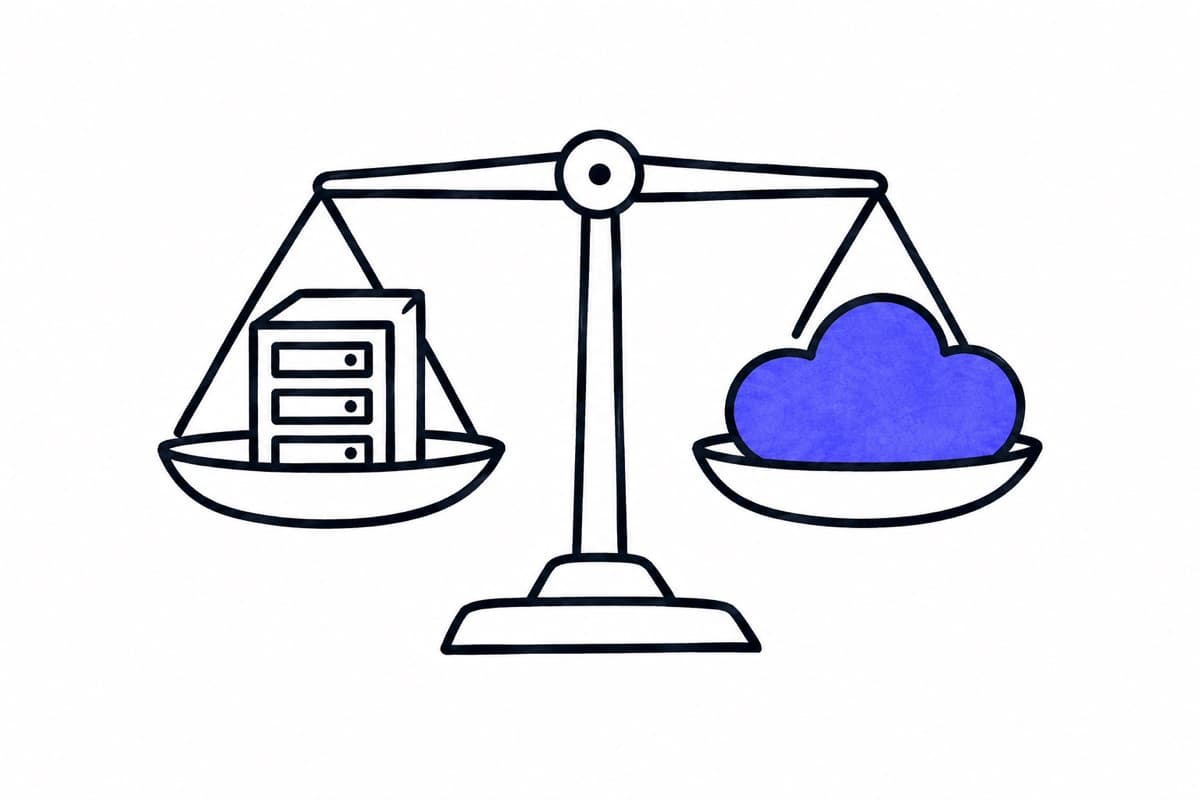
- A chat subscription suits ad hoc work by individuals; a recurring process with fixed inputs, checks and a target system is usually better served by a workflow built on the API.
01 / 07
Can an SME use ChatGPT at work under the GDPR?
The legal frame. The GDPR does not prohibit a specific tool. Processing personal data requires a defined purpose, a legal basis and compliance with the information duties. If the provider acts as a processor, Article 28 requires a binding processing agreement (GDPR, Articles 5, 6, 13 and 28). If employees enter only text without personal data, the GDPR questions become much smaller; confidentiality and trade secrets remain.
Processor or not. When a provider processes personal data on behalf of the company, Article 28(3) GDPR requires a contract with that processor. The German data protection authorities describe this arrangement as the frequent case for AI applications used as a cloud service and state that an agreement under Article 28(3) must then be concluded (DSK guidance "AI and data protection", version 1.0, May 2024). The plan therefore matters: a DPA is on offer for the business services, not for a private account.
Switzerland. Swiss companies work under the Federal Act on Data Protection, which also regulates processing by a processor in its Article 9 (FADP on Fedlex). OpenAI's DPA states that customers based in the EEA or Switzerland conclude it with OpenAI Ireland Ltd. (OpenAI DPA, effective 1 January 2026).
This article describes the published terms and is not legal advice for an individual case.
02 / 07
Which ChatGPT plan has which data terms and price?
The following comparison was checked on OpenAI's own pages on 2 October 2026. Prices are in US dollars as published; OpenAI notes that pricing can vary by country and currency, and taxes are separate. Confirm every figure on the linked page before ordering.
The table compares five ways of using ChatGPT by published price, training on your content, availability of a DPA and data residency.
| Plan | Published price | Training on your content | DPA | Data residency in Europe |
|---|---|---|---|---|
| Free | No charge | Possible unless the user turns it off | Not listed by OpenAI | Not listed |
| Plus | $20 per month, monthly billing only | Possible unless the user turns it off | Not listed by OpenAI | Not listed |
| Business (formerly Team) | Standard seat: $25 per user per month, or $20 billed annually; at least 2 seats | Not by default | Yes, on request via form | Not named as eligible |
| Enterprise | Through OpenAI sales | Not by default | Yes | Available for eligible new customers, at no additional cost |
| API | By usage, billed separately | Not by default | Yes | Available for eligible customers |
Sources for the table. Prices for Plus come from What is ChatGPT Plus?, prices and the two-seat minimum for Business from ChatGPT Business: overview. Training and DPA statements come from OpenAI enterprise privacy, residency from Data residency and inference residency for ChatGPT.
Enterprise and API prices. The help pages we checked do not state a list price for Enterprise; OpenAI refers to its sales team. A Business subscription does not include API usage. The API is billed separately by consumption (OpenAI API pricing).
03 / 07
What does OpenAI do with business data?
Training. OpenAI states that by default it does not use data from ChatGPT Business, ChatGPT Enterprise and the API Platform to train its models, unless the customer explicitly opts in, for example through feedback mechanisms. On personal plans the setting works the other way round: the user has to turn training off. OpenAI adds that a thumbs-up or thumbs-down on a personal account can make the whole conversation available for training, even after opting out.
Access and retention. In ChatGPT Business, workspace admins can view, export and delete members' conversations. OpenAI states that deleted or unsaved conversations are removed from its systems within 30 days, unless longer retention is required by law or reasonably necessary to protect its services or third parties.
Who at OpenAI can see content. For Business, OpenAI names authorised employees for support, abuse investigation and legal compliance, and specialised contractors bound by confidentiality who review for abuse. Business data may also pass through automated classifiers. This belongs in the company's own record of processing and in the information given to data subjects.
What data residency covers. Data residency concerns where in-scope customer content is stored at rest; Europe is defined as the EEA plus Switzerland. OpenAI lists data that may still be stored or processed outside the region, including workspace metadata, billing information, user logins and data sent to external integrations such as web search or connected apps. A company that needs storage in Europe should clarify eligibility with OpenAI before signing, because the page describes this for Enterprise, Edu and the API.
Got a workflow like this?
Tell me about it. Honest take and a rough price, usually within a day.
04 / 07
What must an SME do before rolling out ChatGPT?
The following steps come before the first company account is handed to a team:
- Choose a plan with a contract. Use a plan for which a DPA is offered, and execute it through OpenAI's DPA form. Read the list of sub-processors and the rules on international transfers (GDPR, Articles 44 to 49).
- Provide company accounts. The German authorities recommend that employers provide accounts and devices for professional use, so that staff do not work with private accounts.
- Define purposes and a legal basis. Record the use in the record of processing activities and update the privacy information for customers and employees.
- Assess the risk. Carry out a preliminary risk check. If a high risk is likely, a data protection impact assessment under Article 35 GDPR is required; the authorities expect this to be the case for many AI applications.
- Write an internal policy. State which tasks are permitted, which data is excluded, who checks results and who answers questions.
- Configure the workspace. Set retention, decide which connected apps and web search are allowed, and restrict the sharing of custom GPTs.
- Support AI literacy. Article 4 of the EU AI Act, as amended by Regulation (EU) 2026/1744, requires measures that support the development of AI literacy among staff and others acting on the company's behalf (amending regulation, Article 1(5)). A short, role-based briefing on the tool actually in use, with a record of who attended, is a practical way to do this.
Works council. In Germany, the authorities point out that introducing an AI application can trigger co-determination rights. Involve employee representatives early where they exist.
05 / 07
What should employees not paste into ChatGPT?
A policy is easier to follow when it names concrete categories instead of referring to "sensitive data".
The following content should stay out of prompts unless the company has explicitly assessed and approved the use case:
- Special categories of personal data under Article 9 GDPR, such as health data, and data on criminal convictions.
- Applicant and personnel files, appraisals and payroll data.
- Customer or patient records with names, contact details or account numbers.
- Passwords, API keys and other access credentials.
- Documents covered by professional secrecy or a confidentiality agreement.
- Third-party content the company is not allowed to pass on.
Outputs. The policy should also cover results. Generated text can be wrong or incomplete. A person who knows the subject checks facts, figures and legal statements before anything leaves the company. Decisions with legal effect on a person should not be left to the tool alone (GDPR, Article 22).
06 / 07
When does a custom workflow make more sense than a chat subscription?
What a subscription is good at. A chat workspace suits varied, individual work: drafting, summarising, rephrasing, researching. The employee decides each time what goes in and what happens with the answer. That flexibility is also the limit: every input depends on the person's judgement.
Signs that the task is a process. A task is better built as a workflow when it recurs with the same structure, when the input comes from a system rather than from a person's clipboard, when the result must be written into a target system, or when a defined person has to approve before anything is sent. Typical examples are sorting incoming mail, extracting fields from documents or answering questions from an internal knowledge base with sources.
What changes technically. A workflow calls the model through the API with fixed instructions. The company decides in advance which fields are transmitted, can remove or mask personal data before the call, logs each run and assigns an approval step. Costs are then billed by usage instead of per seat. Whether that is cheaper depends on volume and on the effort for implementation and operation; it has to be calculated for the individual case.
07 / 07
Related decisions
These pages cover the topic hub, two adjacent legal questions and the related service:
- AI automation for SMEs: overview
- The EU AI Act for SMEs: questions before introducing AI
- AI literacy under Art. 4 AI Act: what SMEs must do after the omnibus
- AI knowledge assistants with sources and permissions
To assess whether a task belongs in a chat workspace or a workflow, start with the task, the data involved and the systems. Discuss it with modernagents.