Key takeaways
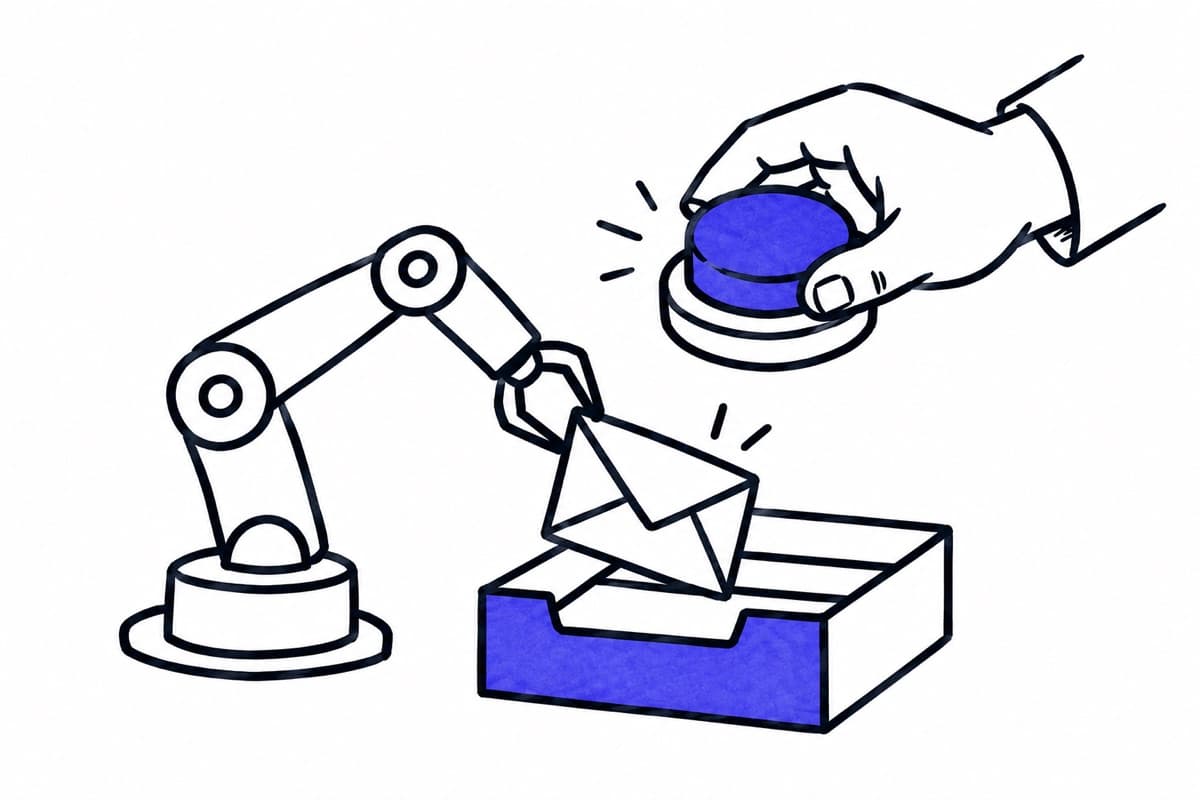
- A chatbot is a conversational interface, automation executes a process, and an AI agent chooses tools and steps within defined authority.
- The concepts can overlap: a chatbot may start a fixed workflow or provide the interface to an agent.
- An agent is not automatically better; if most cases follow a clear pattern, extra freedom may create additional review work without enough benefit.
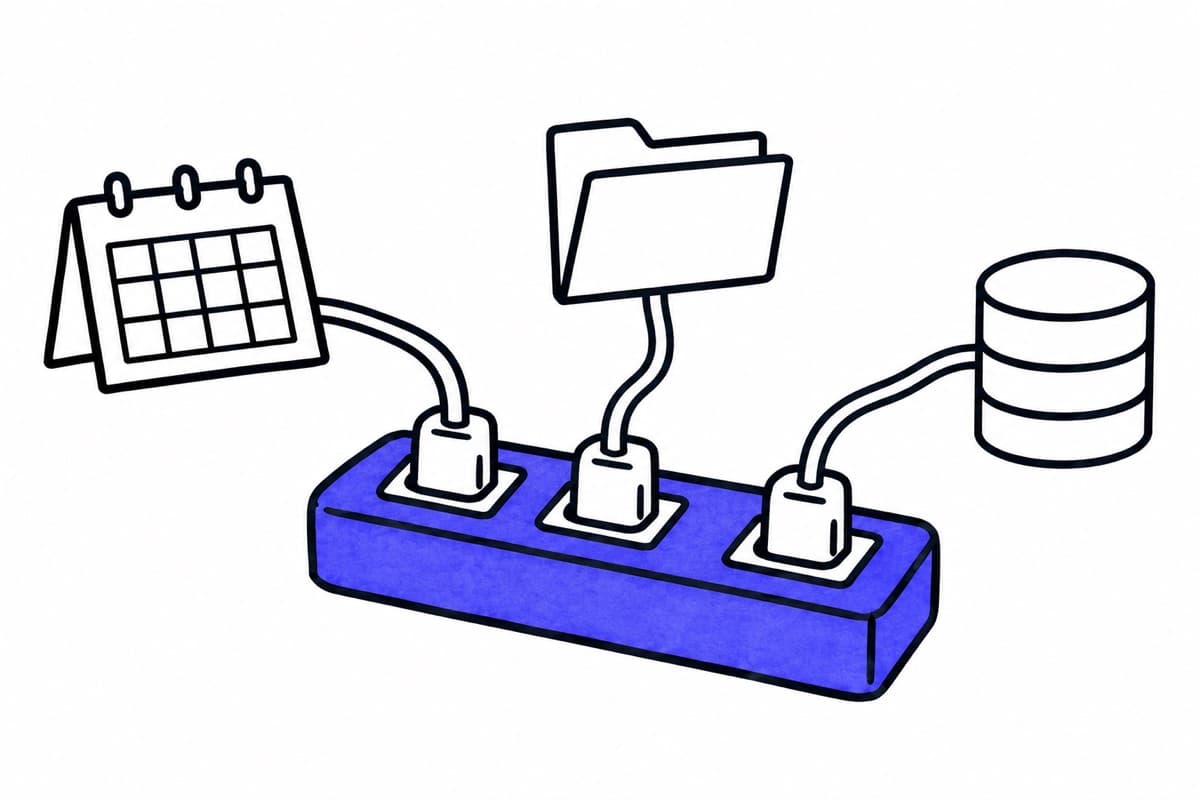
- Unambiguous rules, parameters and permissions are enforced technically, outside the model.
- Choose the smallest solution that reliably covers the real task.
When choosing, ask what the system can do rather than what it is called. Should the system answer a question, transfer information under explicit rules or choose a bounded route through changing information? A precise task makes the architecture easier to assess.
01 / 07
How do chatbots, fixed automation and AI agents differ?
The following table compares a chat interface, a fixed workflow and an agentic process by what starts the work, who determines the path and what needs checking.
| Question | Chat interface | Fixed workflow | Agentic process |
|---|---|---|---|
| What starts the work? | Often a message | Event, schedule or explicit request | Assignment or event |
| Who determines the path? | Depends on the connected system | Predefined rules | Model chooses among permitted tools |
| Is AI necessary? | Not necessarily | Not necessarily | Yes, for the selection described here |
| Can it change something? | Only through a connected, authorised action | Under approved rules | Only through permitted tools and controls |
| What needs checking? | Answer and any resulting action | Rules, information and failure paths | Also selection, parameters and stopping behaviour |
Anthropic distinguishes predefined workflow paths from model-directed selection of steps in its architectural guidance. Market terminology still varies. That article originally appeared in 2024; we use its architectural distinction here, not its historical tooling or model assumptions. Anthropic: Building effective agents, checked on 26 September 2026.
Our table is a practical interpretation, not a universal product taxonomy or legal risk classification. Calling something a copilot, assistant or agent does not establish its permissions or business responsibility.
02 / 07
One task, three possible solutions: which fits when?
Consider a fictional service enquiry. A customer wants to move a maintenance appointment. The company has approved information about its process and an authoritative scheduling system.
Information chatbot: It explains general conditions and records a callback request. It does not claim that an appointment has been changed. This fits when a person should make the actual decision and the common task is primarily to provide guidance.
Fixed rescheduling workflow: The customer selects an unambiguously identified appointment and an available alternative offered by the system. Defined checks cover identity, availability and permitted timing. The workflow performs the approved change and confirms only the verified destination state. Clear rules may not require an independently planning agent.
Agent with bounded tools: The enquiry contains several preferences and incomplete information. The agent can ask targeted questions, retrieve appropriate information and prepare a proposed change. You must decide separately whether the agent is allowed to make the change. Flexible conversation need not imply unrestricted writing rights.
The third option is not automatically better. If most cases follow a clear pattern, extra freedom may create additional review work without enough benefit. A pilot should establish which variation genuinely needs flexible interpretation.
03 / 07
Which decisions stay outside the model?
Even with an agent, enforce unambiguous rules technically. Does the customer ID exist? Does the case belong to the authorised person? Is the destination available? Has the action already happened? Clear information and deterministic checks can often answer these questions.
A model can propose a plausible tool call while still supplying incorrect parameters. The executing component must validate both parameters and permissions. For email, that means establishing the actual recipient and content before sending. For a CRM change, it means identifying the correct record without ambiguity.
n8n, for example, documents human review of selected agent tool calls. This demonstrates how flexible selection can be combined with specific approval. It does not establish the safety of every agent and must be configured for the intended process. n8n human review of tool calls.
Got a workflow like this?
Tell me about it. Honest take and a rough price, usually within a day.
04 / 07
What proves that a task is actually complete?
A chat can say “done” even though nothing was saved in the destination. Conversely, a connection may fail after a change succeeded. Every architecture therefore needs a definition of evidence for business completion.
Evidence per option. For an information chatbot, that might mean a correct supported answer or a clear handover to a person. For a workflow, it may be the expected destination record with a unique reference. The same business results matter for an agent, along with a trace of the permitted action that produced them.
Measurement. Do not measure only conversation length or the number of questions avoided. Inspect false commitments, unclear handovers, duplicate actions and rework. A system that asks fewer questions may still perform worse if it skips material uncertainty.
Test cases. Evaluate ordinary and difficult cases side by side. A straightforward request shows basic capability; conflicting information reveals whether the system knows when to stop or ask. Both are needed to understand the real operating boundary.
05 / 07
How do costs and support differ between the options?
Steps and limits. A fixed workflow generally has a more easily described number of planned steps. An agent may make additional model and tool calls to gather information or revise a proposal. This does not establish a universal price comparison, but it does create different controls to inspect: step limits, time limits and an exit when progress stops.
Support. Every option requires maintained information sources, working connections and exception handling. Agents also need attention to changes in models and tool configuration. Keep a small test set and rerun it after relevant changes.
Existing software. Check existing software capabilities too. Your scheduling application may already offer appropriate self-service, or the CRM may already have a dependable rule for the task. An additional AI system should deliver a named benefit rather than unnecessarily rebuild an existing function.
06 / 07
What should you ask suppliers about actual behaviour?
Request a demonstration of both an ordinary case and a difficult one. Ask which information is read, who determines the next step, which actions are reachable and where a person decides. Include missing details, denied approval and a timeout after a possible write.
A useful brief might say: “The system answers approved service questions and prepares a callback request. It must not promise prices or change appointments without confirmed matching.” This is more actionable than asking for an autonomous AI agent.
Choose the smallest solution that reliably covers the real task. Use explicit rules where rules suffice. Add AI where interpreting language is useful. Where flexible selection of steps is necessary, bound and assess the tools involved. The task should explain the architecture.
07 / 07
Take the worksheet
Worksheet
Download the acceptance worksheet
| Case | Expected |
|---|---|
| Fixed field transfer | Assess deterministic workflow |
| Text to category | Bounded AI classification |
| Tool selection | Define authority and approval |
Columns to fill in, in the file: Observed, Owner.
Download the acceptance worksheet (CSV)
These pages and articles continue the comparison of AI agents, automation and chatbots.